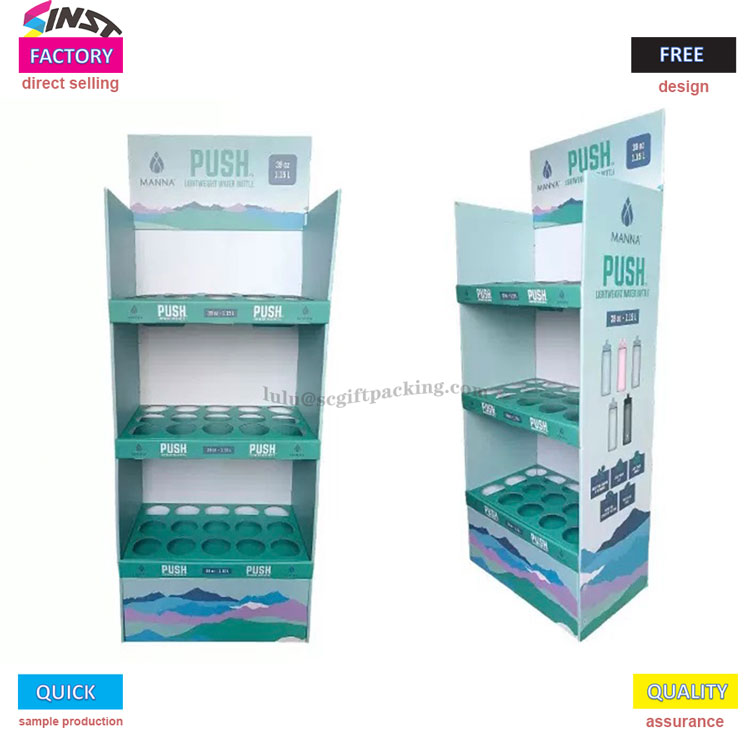
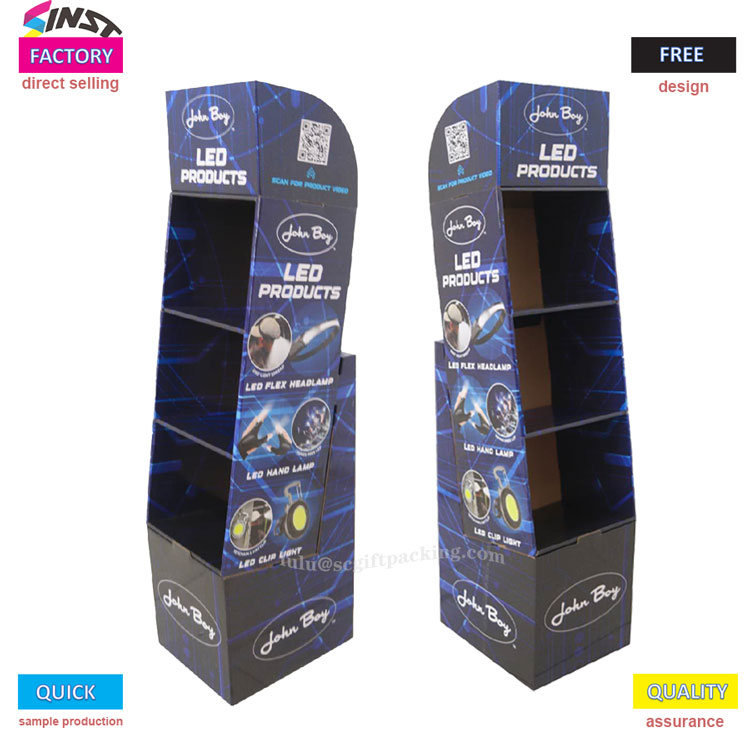
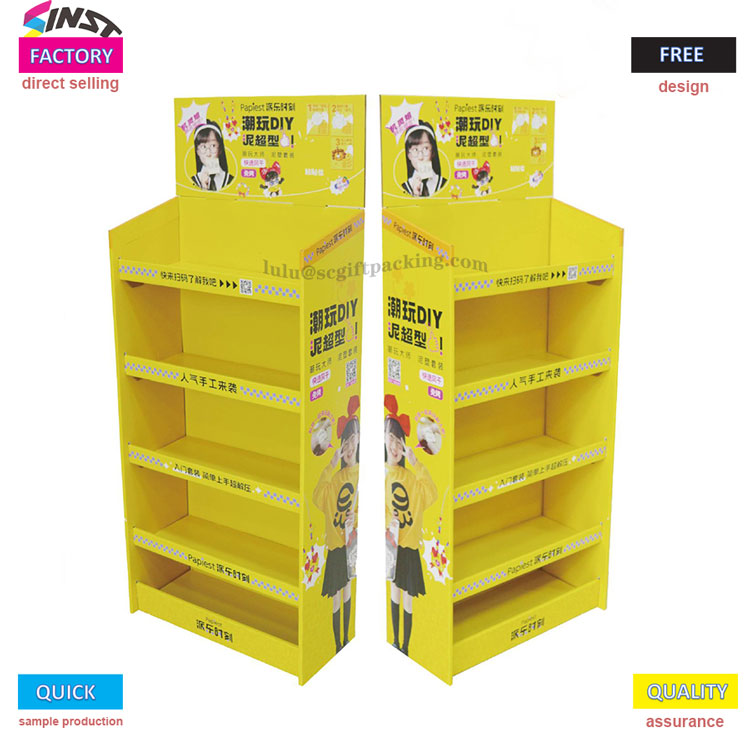
A plush keychain display rack gives small, lightweight products a defined selling space instead of letting them disappear in a bin, on a crowded peg wall, or beside unrelated accessories. The practical benefit is simple: shoppers can see the characters, reach the merchandise, compare designs, and put an item back without wrecking the presentation. For stores selling plush pendants, collectible charms, and blind-box accessories, that usually means a cleaner fixture and fewer missed impulse purchases.
Cardboard is especially suited to short retail campaigns, licensed character launches, and changing assortments because the structure and printed graphics can be planned together. It is not a permanent fixture material, and it should not be treated like one. Its value lies in matching a lightweight product line to a specific store location, promotion, and replenishment routine.
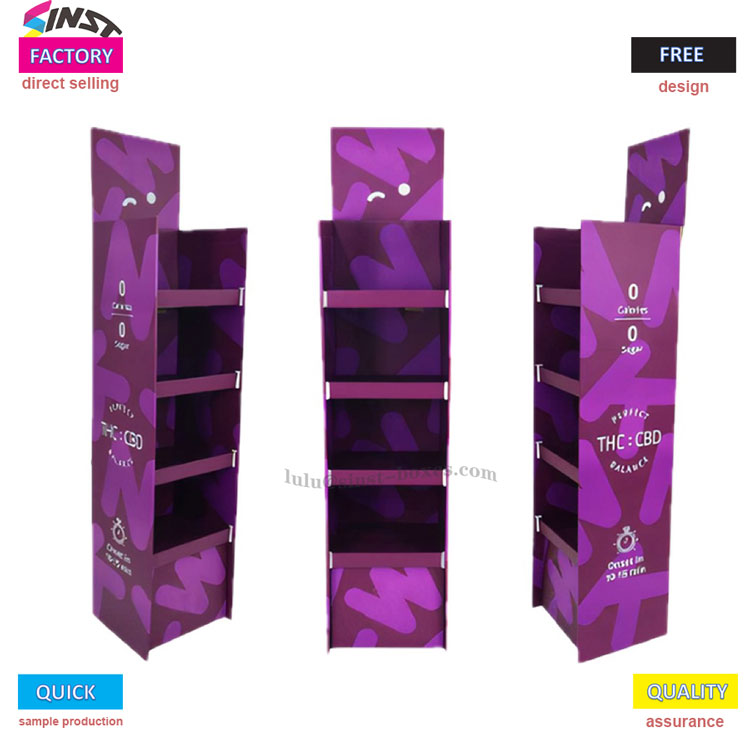
A dedicated cardboard display makes lightweight keychains easier to notice, browse, and replenish
Keychains have a visibility problem. Their selling features are small: an embroidered face, a fuzzy fabric, a character colorway, or a metal clip. If too many are packed into one basket, shoppers see a pile rather than an assortment. A dedicated plush keychain display rack gives each product a clearer front-facing position and gives the collection a single visual destination.
That organization changes store operations as well. Staff can see an empty hook, a thinning tray, or a mixed-up SKU quickly. Replenishment becomes a matter of refilling a known location rather than sorting through loose stock. Printed side panels, headers, or tray fronts can carry the collection name and product imagery, so the display keeps explaining the offer even when an associate is busy elsewhere.
The limitation is capacity. Cramming more pieces onto a compact cardboard unit can hide the graphics that make plush accessories sell. A display should hold enough stock to avoid constant refills, but not so much that clips tangle, hang cards fold over, or the shopper has to dig. That balance is more important than making the rack look full on day one.
Where multi-layer trays and peg displays fit different retail programs
The right format depends less on trend and more on how the product is packaged, where it will sit, and how often the assortment changes. A custom POP display for toy accessories should start with the physical item in hand: the plush body, its loop or clip, any backing card, blind-box carton, and retail label.
Countertop displays for checkout, impulse, and compact shelf locations
A countertop keychain display stand works best where shoppers pause: near checkout, on a service counter, or on a small promotional shelf. Its job is not to carry the whole catalog. It should make a tight, easy-to-understand selection visible in a small footprint. This format suits a character drop, an add-on purchase, or a themed group of accessories that can be understood in seconds.
Counter space is contested, so buyers need to confirm the available footprint and any retailer rules for counter units before approving artwork. A header that is too tall may block sightlines; a low tray wall may not keep soft products orderly. Store teams also need a simple way to lift products out and refill the unit from the back or top.
Layered tray or hook formats for larger assortments and blind-box accessories
Multi-layer trays suit boxed blind-box accessories and other merchandise that stacks neatly and needs a visible category break. Separate levels can prevent series, price points, or character groups from becoming one mixed pile. Hooks are a better match for plush keychains with hang tabs, clips, or carded packaging, since each item can face outward and shoppers can inspect it without handling the entire group.
A peg display for keychains is not automatically the better choice. Soft, irregular plush can bunch together on a hook, especially if the hang attachment is short or the products are thick. Trays avoid that issue, though products may need dividers or a front lip to stay aligned. Review actual production-packed samples, not only flat artwork or product photos, before finalizing either format.
How custom POP design supports visibility without making small items hard to shop
Good custom design uses structure and graphics for different jobs. The structure controls access: tray depth, hook spacing, product separation, and the path a shopper’s hand takes. The graphics identify the collection, explain a blind-box concept if needed, and make the display recognizable from the aisle. Trying to solve both jobs with oversized artwork alone is a common mistake.
Sinst describes its units as custom cardboard, multi-layer displays for lightweight plush pendants and blind-box accessories. That focus matters. A cardboard display stand for convenience store use needs to accommodate quick browsing in a limited space; a trendy-toy store may need clearer organization across more characters. The same category can require very different layouts.
Ask for the design to be evaluated with products loaded in the display. A striking header does little if it shadows the upper row, and a deep tray can conceal the lower half of a small plush pendant. For campaign merchandise, a custom printed keychain display should leave the product—not just the branding—visible at first glance.
What to confirm before ordering a custom plush keychain display stand
Match the structure to SKU count, packaged dimensions, product weight, and store placement
Start with the assortment rather than a stock-looking display shape. Provide every SKU, including package variations and the fullest expected load. Confirm how each item will hang, sit, or stack; the dimensions of its retail package; the combined merchandise weight; and the fixture location. A rack intended for a counter faces different space and access constraints than a floor display near an aisle.
Also identify what happens after the first sell-through. If stores replenish from mixed cartons, labels or clearly separated bays may be necessary. If each tray carries one SKU, that should be evident to the person unloading and stocking it. These small decisions prevent the familiar result: a carefully designed display that becomes a miscellaneous bin after one busy weekend.
Review graphics, assembly, replenishment, shipping, and campaign timing
Artwork approval should cover readable product naming, required retail information, and how brand colors reproduce on the selected board and print process. Ask to see the full dieline and all visible panels, including tray fronts and side walls. A graphic can look right on a screen yet land across a fold, tab, or product opening in the finished unit.
Then examine the operating details. Will the display arrive assembled or flat-packed? Who inserts the merchandise? Are the assembly steps clear enough for store or fulfillment teams? How will finished units be packed for export, and what transit handling must the structure withstand? Campaign timing has to include design, sampling, artwork approval, production, and freight—not only the date the display leaves the factory.
What U.S. buyers should ask an overseas cardboard display supplier
Overseas sourcing can work well for custom retail displays, but vague requests create expensive surprises. Ask the supplier to document the approved structure, artwork version, assembly method, packing configuration, production schedule, and shipping terms. Clarify who arranges freight, who is responsible for import documentation, and where the goods are delivered. These are commercial decisions, not details to leave until production is finished.
Quality questions should be equally direct: How is the prototype approved? What checks occur before packing? How are color expectations communicated? Can the supplier provide material and compliance documentation relevant to your retailer or brand requirements? Sinst states that it offers structural design, graphic printing, finished assembly, and export supply, and lists ISO9001, ISO14001, BSCI, SEDEX, and FSC certifications. Buyers should still verify the current scope and relevance of any certification or documentation for their own program.
Finally, ask for a communication plan. One named contact, clear approval milestones, and photographs or inspection records of finished displays can prevent a late discovery that a revision was misunderstood. See the supplier’s cardboard keychain display rack options as a starting point for a brief, not a substitute for one.
A practical buying checklist and feedback from retail teams
Before releasing a purchase order, check the following:
-
Does the structure fit the actual plush keychain packaging, attachment method, and expected loaded weight?
-
Can a shopper remove one item and return it without dislodging neighboring products?
-
Are SKUs, blind-box series, and replenishment locations clear to store staff?
-
Does the display fit the approved counter, shelf, or floor location?
-
Have you approved the dieline, visible graphics, assembly method, packing plan, and delivery terms?
-
Has the timeline allowed for sampling, corrections, production, and freight?
Feedback from retail teams: The comments that matter most are rarely about the display looking good in a photo. Teams usually focus on whether merchandise stays orderly through customer handling, whether refilling is obvious during a rush, and whether the unit occupies the space promised. Collect that feedback after the first store test. It will tell you if the next plush keychain display rack needs more product separation, easier access, clearer SKU identification, or simply less inventory loaded at once.

 English
  Español
  Português
  русский
  Français
  日本語
日本語  Deutsch
  tiếng Việt
  Italiano
  Nederlands
  ภาษาไทย
  Polski
  한국어
한국어  Svenska
  magyar
  Malay
Malay  বাংলা ভাষার
  Dansk
Dansk  Suomi
Suomi  हिन्दी
  Pilipino
  Türkçe
  Gaeilge
  العربية
  Indonesia
  Norsk
Norsk  تمل
تمل  český
český  ελληνικά
  український
  Javanese
  فارسی
فارسی  தமிழ்
தமிழ்  తెలుగు
  नेपाली
  Burmese
  български
  ລາວ
ລາວ  Latine
  Қазақша
  Euskal
  Azərbaycan
  Slovenský jazyk
  Македонски
  Lietuvos
  Eesti Keel
  Română
  Slovenski
  मराठी
मराठी  Srpski језик