Choose a countertop or hanging display when space is tight and visibility matters most. Use a floor, rotating, or stacking format when you need more capacity, multiple SKUs, or a freestanding promotional feature. That’s the short answer. The final choice depends on your jar dimensions, filled weight, placement, restocking routine, and how the packed display will move through your supply chain.
Choose the format by placement, shopping behavior, and replenishment needs
A custom honey jar display stand should fit the way people shop in that location—not just the available floor area. Start by deciding where customers will encounter the honey, how many varieties they need to compare, and who will refill the display.
Countertop and hanging displays for compact, high-visibility placements
A honey jar countertop display suits checkout counters, tasting stations, deli counters, and specialty-store shelves. It keeps a small assortment close to eye level and can support an impulse purchase without taking over the store. Capacity is limited, so it works best where staff can replenish it frequently.
Hanging displays use vertical space and may suit side panels, shelf edges, or other approved retail fixtures. Confirm the hanging hardware, attachment points, jar retention method, and loaded weight with the retailer. A paper display can be correctly engineered and still fail if the store fixture isn’t designed for the load.
Floor, rotating, and stacking displays for larger assortments and campaigns
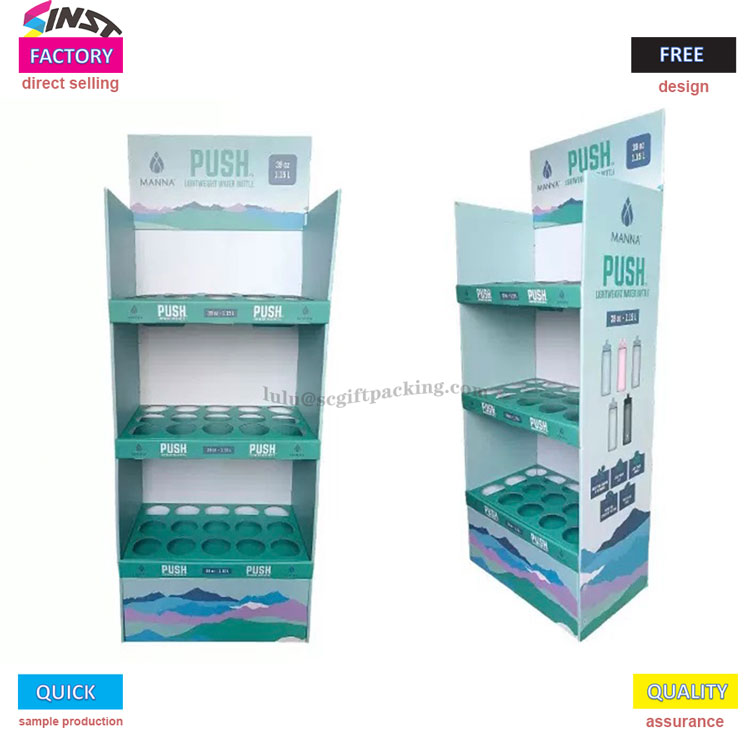
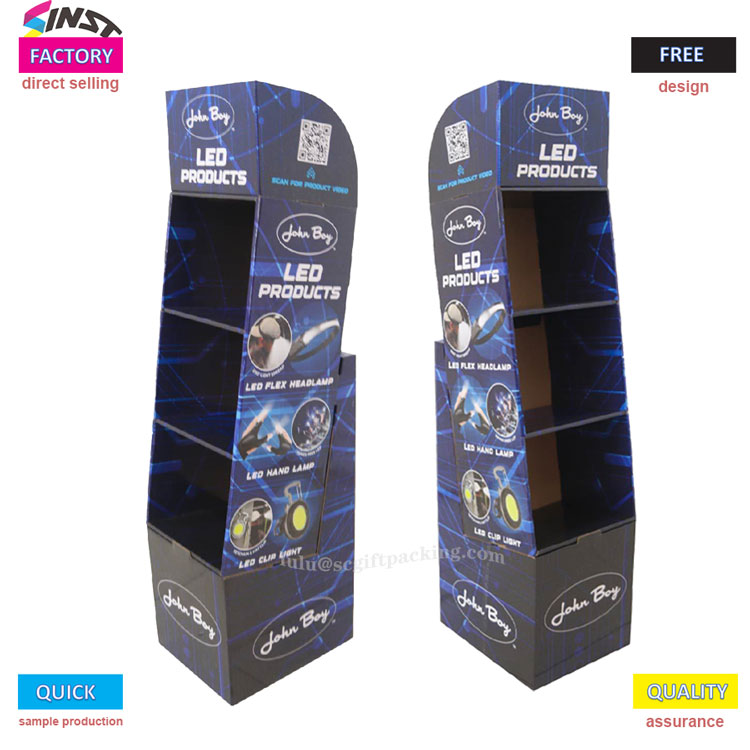
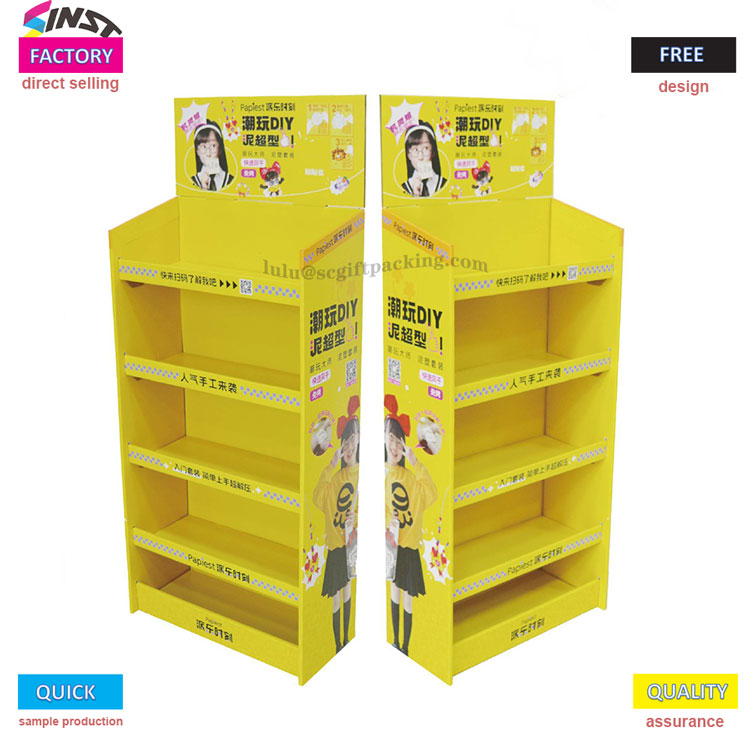
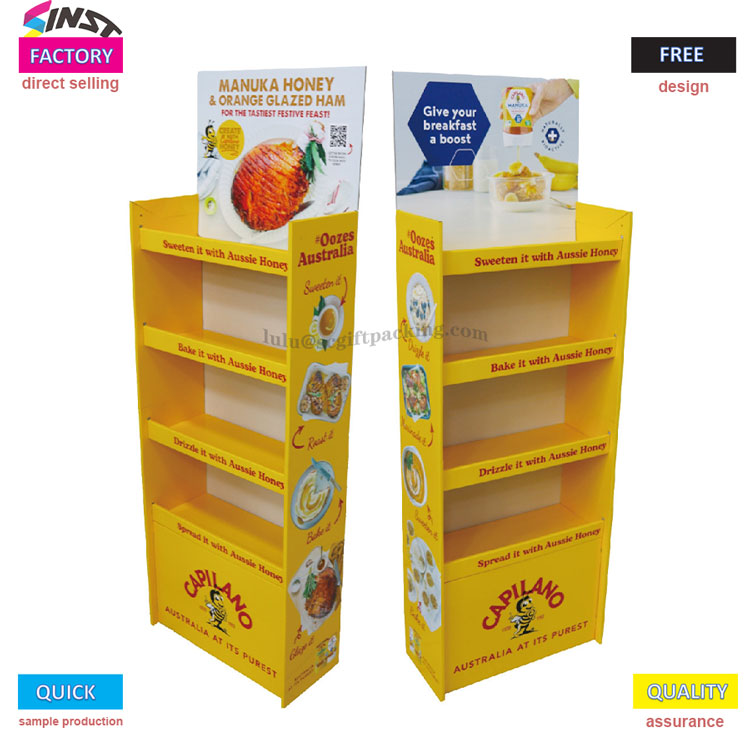
A POP cardboard floor display stand gives you more selling area for multiple jar sizes, flavors, or gift packs. It’s usually the practical choice for supermarket promotions and seasonal campaigns, but only if the base footprint fits the retailer’s planogram and traffic rules.
A rotating display platform provides access from several sides, which can help in open retail areas and exhibitions. It also introduces moving parts and requires clearance around the unit. Stacking combinations are more flexible: modules can be arranged around the assortment or restocking plan. Buyers should define whether modules will arrive assembled, nest inside one another, or ship flat.
Jar diameter, height, quantity, and filled weight define the structural brief
Don’t request a cardboard honey jar display using jar capacity alone. Two jars sold as the same nominal size may have different shoulder profiles, lid diameters, base widths, and filled weights.
Provide the maximum jar diameter, total height with the lid fitted, filled weight, units per shelf, and number of shelves. Identify glass and plastic jars separately. Glass creates a higher consequence if a shelf bows, a divider loosens, or a jar rolls toward the edge.
Also describe how the product will be loaded. A shelf that holds jars in neat rows may need dividers, front lips, or individual cutouts. Mixed-SKU displays need allowance for the largest and heaviest item, not an average. Sinst’s listed construction for this product category includes 157 gsm art paper and 1500 gsm cardboard, but the final material structure should be confirmed against the approved design and load test.
Match the display to supermarkets, specialty shops, events, and farmers markets
| Sales channel | Likely format | What to confirm |
|---|
| Supermarkets | Floor, stacking, or approved hanging display | Planogram footprint, aisle rules, replenishment access, campaign duration, and retailer approval |
| Specialty shops | Countertop, compact floor, or rotating display | Brand visibility, small-SKU presentation, available counter space, and staff refill frequency |
| Exhibitions and pop-ups | Floor, rotating, or modular stacking display | Repeated assembly, transport between venues, access from multiple sides, and flat-pack size |
| Farmers markets | Countertop or compact stacking display | Uneven tables, wind exposure, frequent handling, vehicle space, and protection from moisture |
A honey jar display for farmers markets faces conditions that controlled retail stores often avoid. Cardboard shouldn’t be treated as weatherproof. Keep it away from rain, wet ground, condensation, and unattended outdoor exposure. If frequent setup and breakdown are expected, tell the manufacturer; fold lines, locking tabs, and printed surfaces will see more wear.
Separate standard customization options from project-specific requirements
Print and finish choices are straightforward. Structural performance, retail compliance, and shipping configuration must be defined for each project.
Custom sizing, CMYK or Pantone printing, lamination, and varnish options
Sinst lists custom sizing, CMYK or Pantone printing, and glossy or matte lamination and varnish options for its custom-printed honey display stands. CMYK is commonly used for photographic artwork and multicolor graphics. Pantone references are useful when a specific brand color needs to be communicated during production, although the printed result can still be influenced by the substrate and finish.
Lamination can change the appearance and surface behavior of the printed sheet, while varnish offers another finishing route. Request a physical sample if color or sheen is commercially important; a screen proof can’t show the final surface accurately.
Treat any 5 kg statement as a defined test condition, not a universal rating
If a listing, drawing, or quote mentions 5 kg, ask what that figure applies to: one shelf, one tier, the complete unit, or a specific test sample. Load performance changes with shelf span, jar placement, material direction, humidity, assembly quality, and duration under load. A single number isn’t a safe rating for every size or configuration.
Test the proposed structure with your actual filled jars. Look for shelf sag, leaning sidewalls, tab release, base distortion, and jars shifting during handling.
Approve the sample, load test, assembly method, flat-pack carton, and applicable documentation
Sinst states that samples and export packing are available. Your approval process should cover more than printed artwork. Assemble the sample using the instructions intended for store staff, load it with the planned assortment, and leave it loaded long enough to reveal early deformation.
- Check jar fit, shelf spacing, dividers, front lips, and customer access.
- Confirm whether tape, glue, tools, or extra labor are required at the store.
- Review the flat-pack carton dimensions, protective packing, carton labels, and units per carton.
- Ask which documentation applies to the factory, material, or order.
Sinst lists ISO 9001, ISO 14001, BSCI, SEDEX, and FSC among its company certifications. Buyers should request current documents and verify their scope rather than assuming every certification applies automatically to a specific display or paper source.
Send Sinst a quote-ready brief covering the 1,000-piece MOQ, timing, and US delivery
Sinst lists a 1,000-piece minimum order quantity for this product category. Before requesting a quote, prepare a compact decision checklist:
- Sales channel and exact placement
- Preferred format: countertop, hanging, floor, rotating, or stacking
- Jar diameter, height, filled weight, material, and quantity per display
- Number of SKUs and desired arrangement
- Display footprint or retailer size restrictions
- CMYK or Pantone artwork and preferred finish
- Sample, loading, assembly, and packing requirements
- Order quantity, required delivery date, and US destination ZIP code
- Requested shipping terms and documentation
Include photos or physical samples of the filled jars if dimensions don’t capture their shape. Use Sinst’s Honey Jar Display Stand quote page to send the brief, then confirm sample timing, production timing, freight method, and delivery responsibility in the written quotation.

 English
 Español
 Português
 русский
 Français
 日本語
 Deutsch
 tiếng Việt
 Italiano
 Nederlands
 ภาษาไทย
 Polski
 한국어
 Svenska
 magyar
 Malay
 বাংলা ভাষার
 Dansk
 Suomi
 हिन्दी
 Pilipino
 Türkçe
 Gaeilge
 العربية
 Indonesia
 Norsk
 تمل
 český
 ελληνικά
 український
 Javanese
 فارسی
 தமிழ்
 తెలుగు
 नेपाली
 Burmese
 български
 ລາວ
 Latine
 Қазақша
 Euskal
 Azərbaycan
 Slovenský jazyk
 Македонски
 Lietuvos
 Eesti Keel
 Română
 Slovenski
 मराठी
 Srpski језик