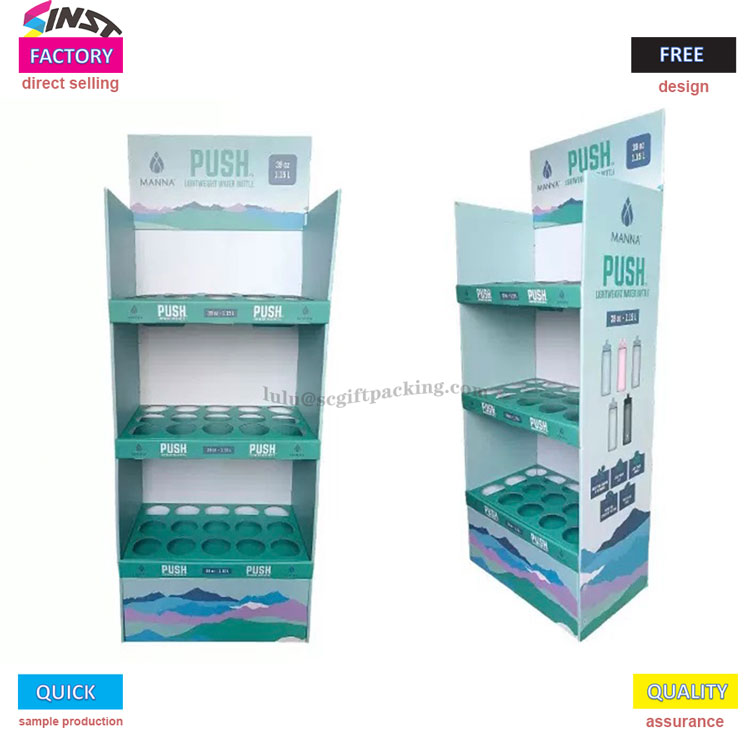
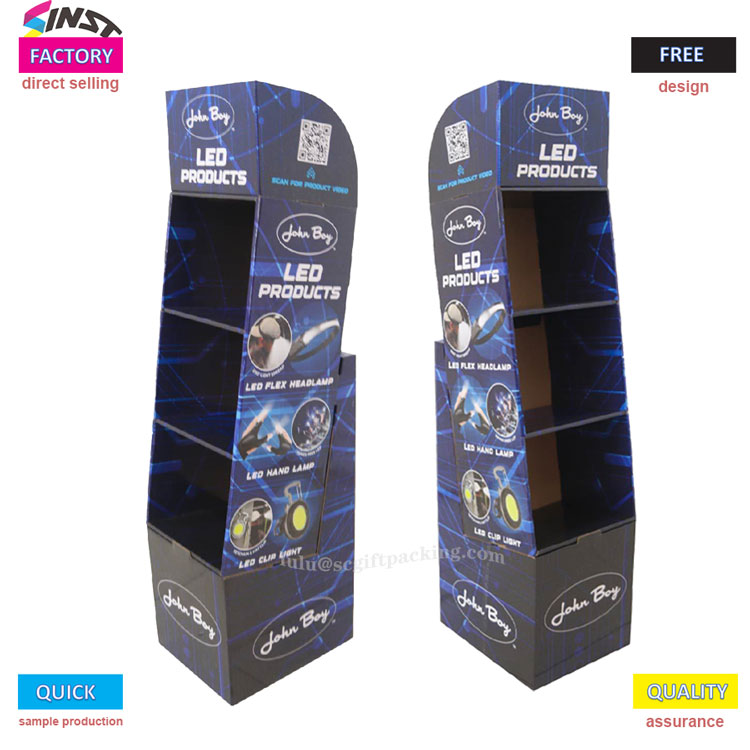
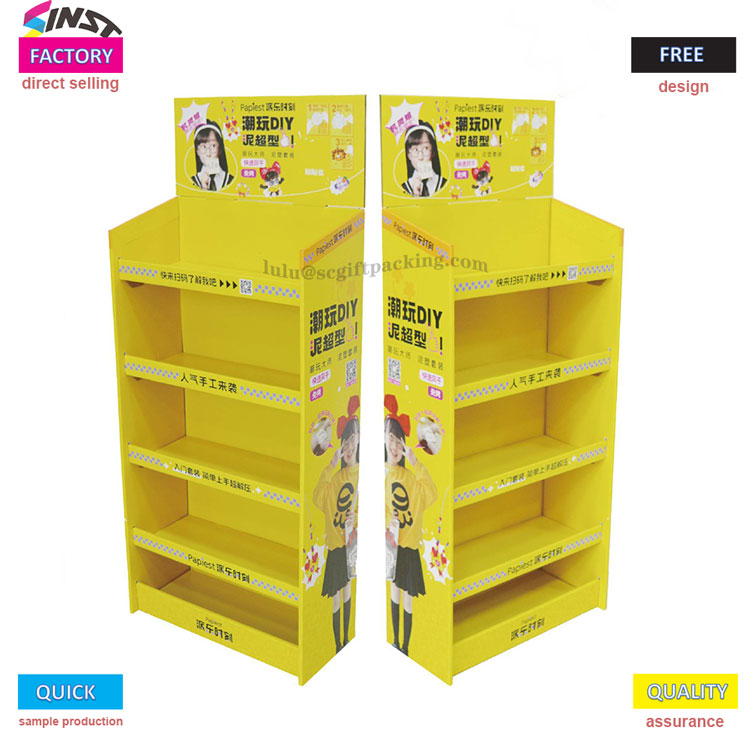
Specify the packed product, SKU count, unit capacity, retail placement, maximum footprint, print requirements, finish, packing method, destination, and required delivery date. A manufacturer cannot quote a cardboard pen display stand accurately from pen length or a reference photo alone. The brief must describe what the display will hold, how shoppers will use it, and how the finished units must travel.
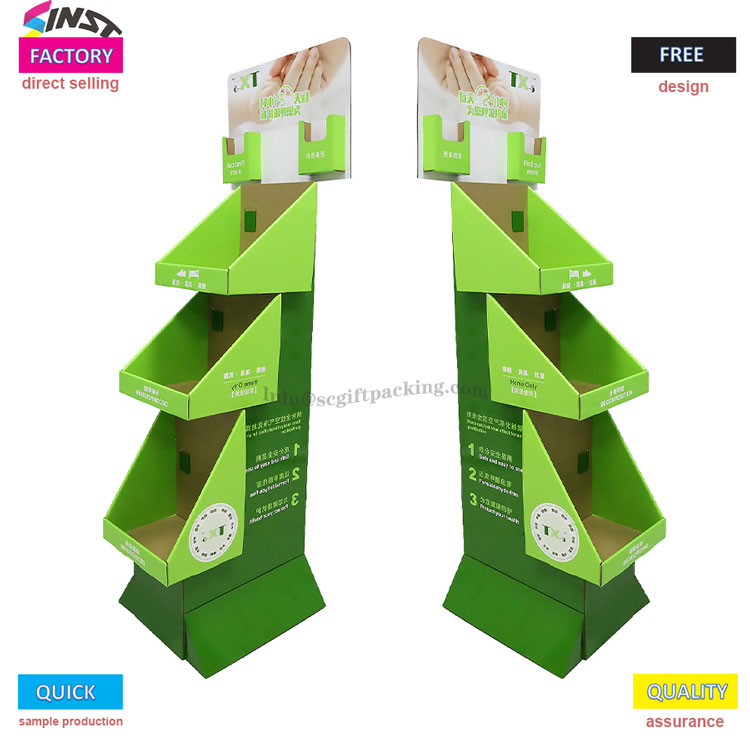
A quote-ready color pen cardboard display rack brief must define the product, capacity, placement, graphics, packing, and delivery requirements
Start with six groups of information: packaged-product details, desired capacity, countertop or floor placement, approved artwork, shipping format, and delivery destination. Include photographs or physical samples if the packaging has an unusual shape.
State whether you need a tray, shelf rack, peg display, dump bin, or another format. Sinst manufactures floor and countertop POP displays and offers custom sizing, CMYK or Pantone printing, lamination or varnish, OEM service, and samples. Its color pen cardboard display rack page lists a 1,000-piece minimum order quantity.
Don’t use “standard pen size” as a specification. A loose pen, paperboard sleeve, blister card, and boxed pen set create four different structural briefs.
Choose the display configuration around placement, packaging, and how customers shop
The right format depends less on the pen itself than on the retail location and selling pack. Confirm available space, viewing height, customer access, assortment size, and any retailer fixture rules before structural design begins.
Countertop racks and trays for compact pen, marker, and colored-pencil assortments
A countertop pen display rack works well where the assortment is small and individual products can stand in divided cells or shallow trays. Give the manufacturer the counter-space limit and required product orientation. If shade names or prices appear near the bottom of the pack, a high front lip can hide information customers need.
Explain how staff will replenish the display. Rear loading may be useful behind a service counter; open-top access may be better for self-service. For loose pens or pencils, include barrel diameter, clip shape, and any caps or grips that change how units nest.
Floor-standing and peg displays for larger ranges, hanging packs, and promotional launches
A floor-standing pen display stand provides more merchandising area but needs an approved footprint and total loaded weight. Identify heavy boxed sets, since putting them high in the display can affect stability. If the unit will stand in a main aisle, ask the retailer about height, protrusions, and placement restrictions.
Peg displays suit blister cards and hanging pouches. Supply the complete package dimensions, hang-hole type and position, pack thickness, and desired units per hook. A cardboard marker display stand with shelves needs different dividers and front restraints from a peg-based design; don’t treat them as interchangeable.
Define packaged-product dimensions, SKU mix, capacity, footprint, and replenishment access
Measure the saleable package at its widest, tallest, and deepest points, including hang tabs, folded headers, clips, and bulging pouches. Record unit weight as packed for retail. For multiple SKUs, provide a list rather than one average dimension.
- Assortment: SKU names, colors, package formats, and quantities.
- Capacity: total units and units per SKU, including any reserve stock stored in the base.
- Facings: how many products must remain visible at once.
- Footprint: the maximum width and depth allowed by the retailer.
- Access: front, rear, or top replenishment and any need for removable trays.
Also state whether customers select individual colors, multipacks, or boxed sets. Dividers control product movement and preserve SKU separation, while shelf lips and tray walls retain stock. Their dimensions must balance retention against label visibility and easy removal.
Specify corrugated construction, custom printing, finishes, and the evidence required for material claims
Give the supplier the loaded weight, expected retail period, handling conditions, and distribution route so it can propose the corrugated board construction. Don’t select a board solely by appearance. Shelf spans, base panels, dividers, folds, and joints all influence how the load passes through the display.
For a custom printed pen display stand, identify CMYK process artwork or specific Pantone references. Color can shift with paper surface, ink, finish, and proofing method, so define what must be approved: a digital proof, printed color sample, or physical display sample. Sinst lists lamination and varnish options for its custom cardboard pen display. Choose the finish based on scuff exposure, desired appearance, retailer requirements, and recovery goals—not from a finish name alone.
Keep FSC sourcing documentation separate from recyclability statements and confirm both for the actual order
FSC sourcing and recyclability are different claims. If FSC-certified material or an FSC label is mandatory, put that requirement in the RFQ and request current, order-relevant documentation before approving artwork. Do not assume a supplier or product is FSC certified without evidence.
Sinst describes recyclable paper construction, but recyclability still depends on the final combination of paper, inks, adhesives, coatings, labels, and local collection rules. Ask for the material breakdown of the quoted display and packing rather than applying a broad claim to every configuration.
Approve the sample, flat-pack assembly, unit packing, production schedule, and shipping plan before volume production
Use the sample to test real packed products, not empty packages or estimated dimensions. Check loading, removal, label visibility, stability, divider fit, graphics alignment, and the time needed for store staff to assemble and fill the unit. Document changes in a revised drawing or approved sample.
Confirm whether displays ship flat, partly assembled, or fully assembled. Flat packing can reduce freight volume, but complicated folds or poorly marked tabs create store-level errors. Request assembly instructions when required and define how each unit is protected, counted, labeled, master-packed, and palletized.
The schedule should separate sample approval, artwork approval, production, packing, and transit. Give the supplier the destination, shipping mode, delivery terms, required arrival date, and any carton marks or documents. “Needed for launch” isn’t a usable deadline.
Common sourcing questions about Sinst’s 1,000-piece MOQ, OEM service, samples, customization, and delivery
- What is the listed MOQ?
Sinst lists a 1,000-piece MOQ for this product category. Ask whether that quantity applies to one structure and one graphic version, especially if you need regional artwork or several assortments.
- What does OEM service require from the buyer?
Provide the product data, structural preference, artwork, branding rules, packing requirements, and approval criteria. Clarify who supplies final print files and who signs off on the structure.
- Can buyers request a sample?
Sample availability is listed. Confirm whether you need an unprinted structural sample, a color sample, or a fully printed prototype, as these answer different questions.
- What can be customized?
Sinst lists custom sizing, CMYK or Pantone printing, and lamination or varnish finishes. Feasibility still depends on the product, structure, order quantity, artwork, and delivery plan.
- How should delivery be quoted?
State the full destination, desired shipping method, delivery terms, deadline, and whether the quote should include freight, pallets, export packing, or specified documents.
Final RFQ checklist: artwork files, display style, packed-product details, quantities, destination, deadlines, and required documents
- Editable artwork, linked images, fonts, color references, and branding instructions
- Countertop, floor-standing, tray, shelf, peg, or dump-bin format
- Packed dimensions, weights, samples, SKU mix, facings, and capacity
- Maximum footprint, replenishment method, and retailer restrictions
- Order quantity, graphic versions, finish, unit packing, and carton labels
- Destination, delivery terms, required arrival date, and compliance documents
Send those details through Sinst’s cardboard pen display stand request page. The result is a brief that can be priced, sampled, and checked against the actual retail job.

 English
 Español
 Português
 русский
 Français
 日本語
 Deutsch
 tiếng Việt
 Italiano
 Nederlands
 ภาษาไทย
 Polski
 한국어
 Svenska
 magyar
 Malay
 বাংলা ভাষার
 Dansk
 Suomi
 हिन्दी
 Pilipino
 Türkçe
 Gaeilge
 العربية
 Indonesia
 Norsk
 تمل
 český
 ελληνικά
 український
 Javanese
 فارسی
 தமிழ்
 తెలుగు
 नेपाली
 Burmese
 български
 ລາວ
 Latine
 Қазақша
 Euskal
 Azərbaycan
 Slovenský jazyk
 Македонски
 Lietuvos
 Eesti Keel
 Română
 Slovenski
 मराठी
 Srpski језик