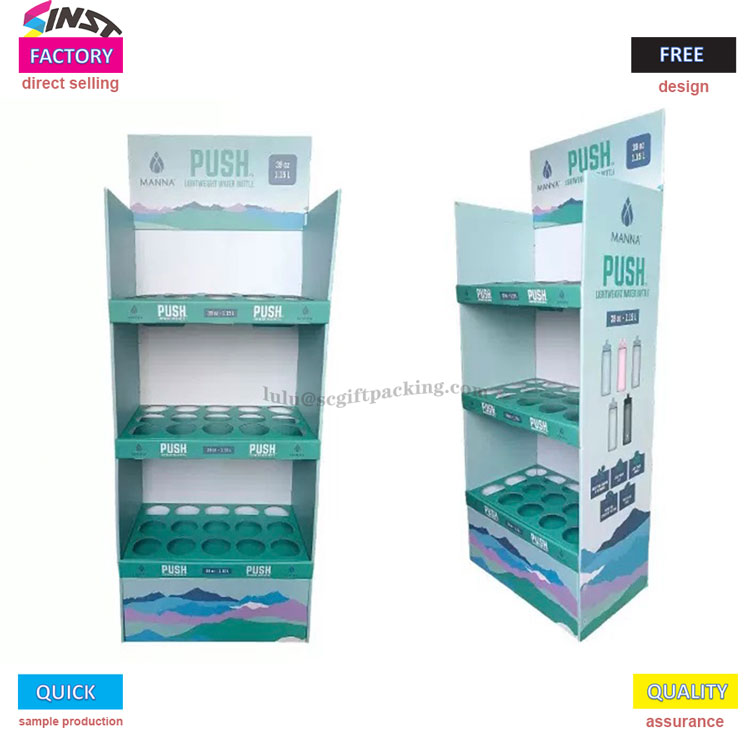
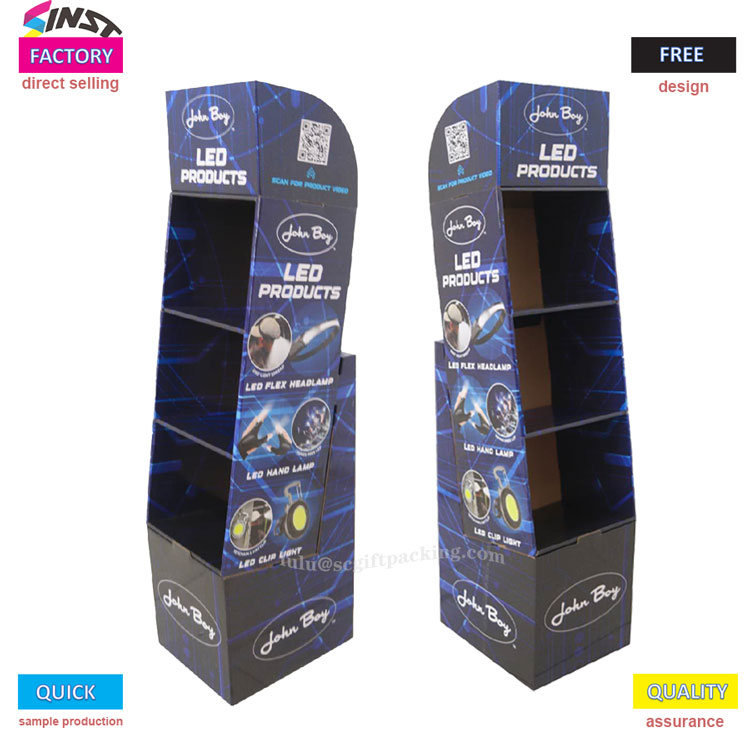
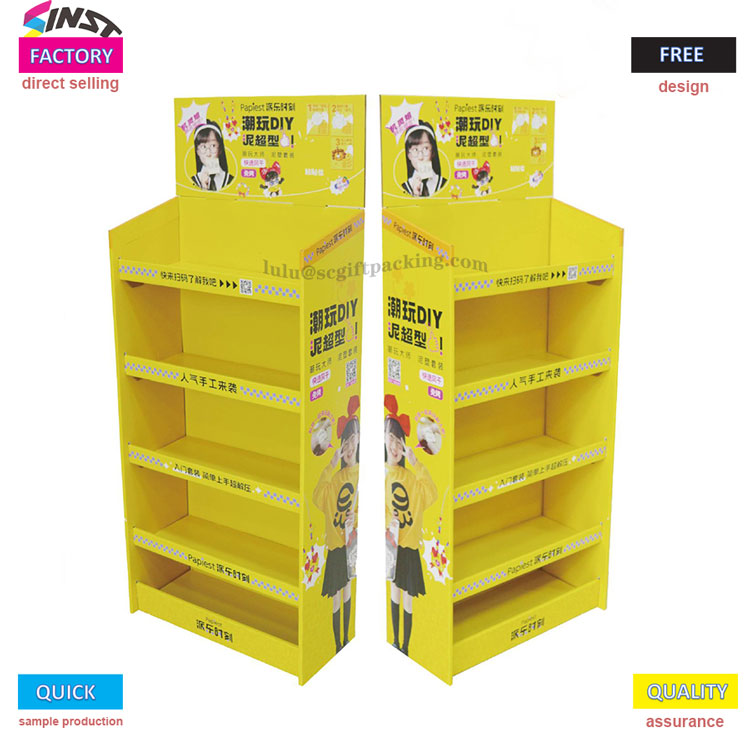
An effective potato chip supermarket paper display rack combines high-saturation visual disruption to trigger impulse buys with a durable, lightweight structural design that survives the physical abuse of high-frequency retail restocking.
The Intersection of Visual Disruption and Operational Efficiency
Store managers evaluate temporary fixtures on two strict criteria: how fast they sell product and how little time they take to assemble. A custom cardboard potato chip display rack fails if it collapses under the awkward weight of oversized, nitrogen-filled bags. It also fails if it takes two employees twenty minutes to fold and lock the tabs.
Sinst addresses this tension by pairing a 157gsm art paper outer layer with a 1500gsm corrugated cardboard core. The heavy-duty core provides the structural rigidity required for high-frequency retail environments. Corrugated cardboard is naturally susceptible to ambient moisture. When supermarkets run heavy refrigeration or HVAC systems, the resulting humidity shifts can cause lower-grade fluting to warp and buckle. Utilizing a dense 1500gsm core prevents this environmental degradation, ensuring the shelves do not bow after a week on the floor.
Meanwhile, the lightweight nature of the paper material supports rapid assembly and freight efficiency. Shipping fully assembled metal fixtures means paying to ship empty air. Flat-packing these cardboard units allows thousands of displays to fit on a single truck, drastically reducing per-unit freight costs while allowing a single store worker to construct the unit in minutes.
Driving Impulse Purchases Through High-Saturation Color Schemes
Snack purchases are rarely planned. They rely on immediate visual impact to interrupt a shopper's routine. In the center aisles of a grocery store, muted tones and standard beige shelving camouflage products.
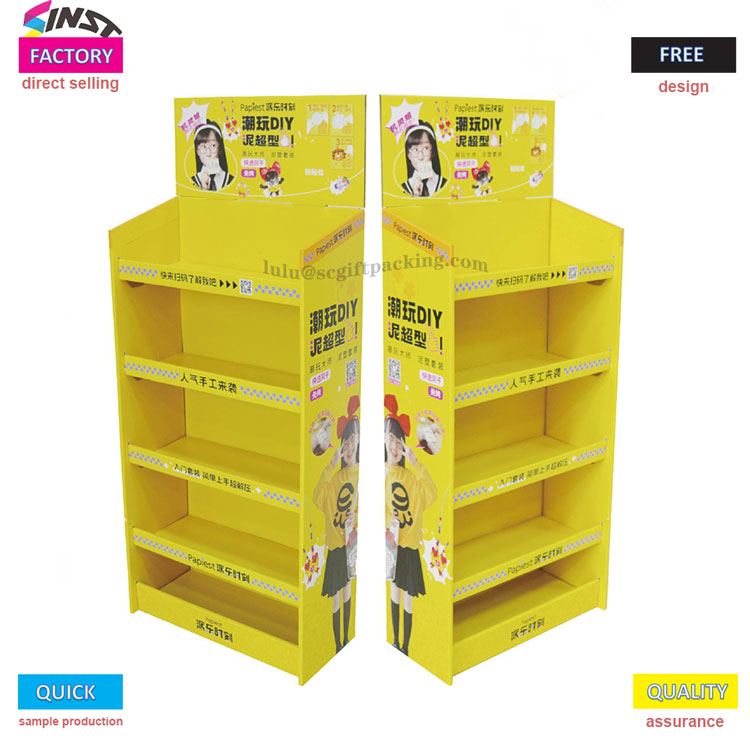
Using a highly saturated bright yellow color scheme turns a basic paper display stand into an unavoidable visual obstacle. Yellow naturally advances toward the eye faster than cooler colors, making it the primary choice for snack food merchandising. It instantly captures customers' attention and takes on the "eye-catching responsibility" of the promotion.
The 157gsm art paper surface is critical here. Lower-grade paper absorbs ink unevenly, resulting in a washed-out yellow that looks cheap under harsh fluorescent supermarket lighting. A premium coated paper holds the ink securely on the surface. This ensures the bright yellow remains punchy, sharp, and consistent across a massive multi-store rollout, matching the vibrant branding of the potato chip bags themselves.
Optimizing High-Frequency Restocking With 4-Tier Open Storage
Potato chip bags are notoriously difficult to merchandise. They are bulky, slick, and prone to sliding off flat surfaces. A standard flat shelf requires constant facing by store clerks to maintain a neat appearance.
The architecture of a 4-tier supermarket snack display rack solves this through clear layering and angled open storage space. Each tier is precisely deep enough to hold multiple facings of chips without allowing the bags to slump forward. This layered separation lets merchandisers neatly place different flavors—barbecue on top, sour cream and onion below—without the rows bleeding into one another.
This open design also drastically reduces restocking friction. Clerks can drop new inventory directly into the trays without maneuvering around tight clearance gaps. You get a lightweight pop display rack for potato chips that acts as a low-maintenance, high-turnover tool for store staff.
Adapting Footprints for Supermarkets Versus Convenience Stores
A display’s physical footprint dictates where a retailer will allow it to live. Supermarkets can accommodate wider endcaps and standalone island displays in their primary action alleys. Here, the display needs enough mass to hold high volumes of product during weekend rushes without needing hourly refills.
Convenience stores present a very different challenge. Floor space is measured in inches, and aisles are heavily constricted. A retail paper display rack for convenience stores must maintain a small physical stature while delivering maximum visual energy. By utilizing a compact square base and relying on vertical 4-tier stacking, the display fits neatly against end-aisle pillars or directly beside cash wraps without violating fire codes or blocking foot traffic.
Enhancing Temporary Displays With RFID and NFC Smart Tags
Brands running national promotions often lose visibility once corrugated fixtures leave the distribution center. Store-level execution is notoriously inconsistent, with displays sometimes sitting in backrooms for weeks.
Embedding RFID or NFC tags into the 1500gsm cardboard base during manufacturing provides a verifiable tracking method. Field merchandisers can scan the display with a smartphone to confirm it was assembled on time and placed in the correct zone. Because the tags are integrated directly into the paper substrate, they add negligible weight and do not interfere with the rack’s recyclability at the end of the promotional window.
Fulfilling US Retail Compliance and Volume Requirements
Major US retailers operate with strict supplier compliance manuals. They will reject non-compliant materials at the receiving dock, regardless of how good the graphics look. Sourcing an FSC certified cardboard snack display is no longer optional; it is a baseline requirement for entry into stores demanding sustainable supply chains.
Sinst Printing and Packaging Co., Ltd. backs its structural designs with comprehensive manufacturing credentials, holding ISO9001, ISO14001, BSCI, and SEDEX certifications. This guarantees that the raw materials are ethically sourced and environmentally responsible. For large-scale promotional rollouts, production scale matters just as much as compliance. With a fully integrated in-house production facility, Sinst maintains a daily capacity of over 30,000 units, supporting rapid deployment schedules. Buyers can initiate custom pilot programs with a minimum order quantity of 1,000 pieces, ensuring the potato chip supermarket paper display rack performs exactly as required on the retail floor before committing to nationwide freight.

 English
  Español
  Português
  русский
  Français
  日本語
日本語  Deutsch
  tiếng Việt
  Italiano
  Nederlands
  ภาษาไทย
  Polski
  한국어
한국어  Svenska
  magyar
  Malay
Malay  বাংলা ভাষার
  Dansk
Dansk  Suomi
Suomi  हिन्दी
  Pilipino
  Türkçe
  Gaeilge
  العربية
  Indonesia
  Norsk
Norsk  تمل
تمل  český
český  ελληνικά
  український
  Javanese
  فارسی
فارسی  தமிழ்
தமிழ்  తెలుగు
  नेपाली
  Burmese
  български
  ລາວ
ລາວ  Latine
  Қазақша
  Euskal
  Azərbaycan
  Slovenský jazyk
  Македонски
  Lietuvos
  Eesti Keel
  Română
  Slovenski
  मराठी
मराठी  Srpski језик