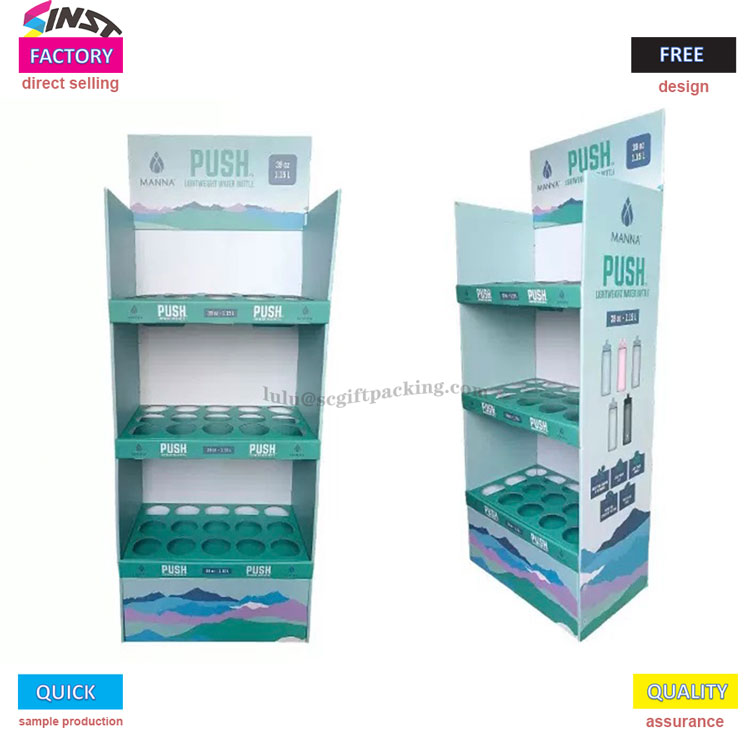
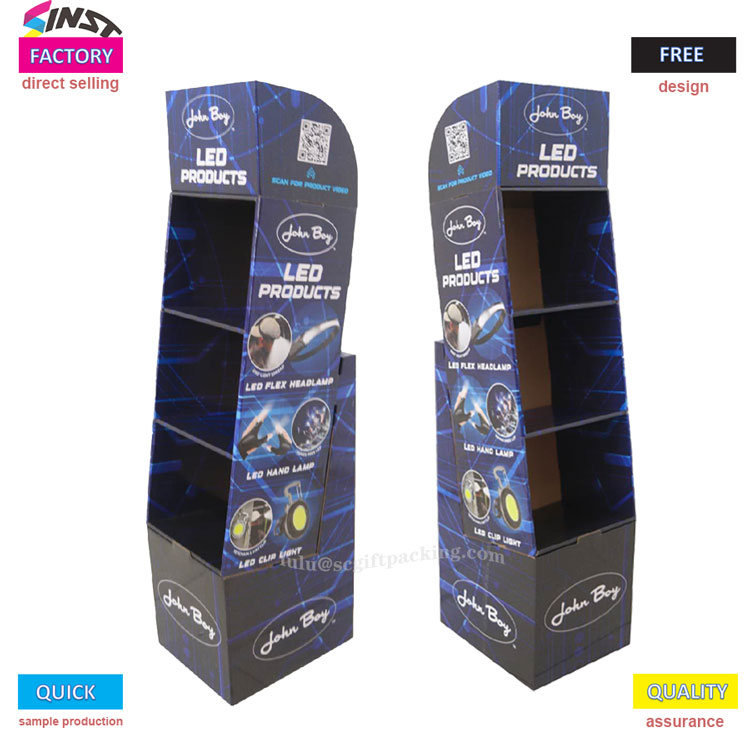
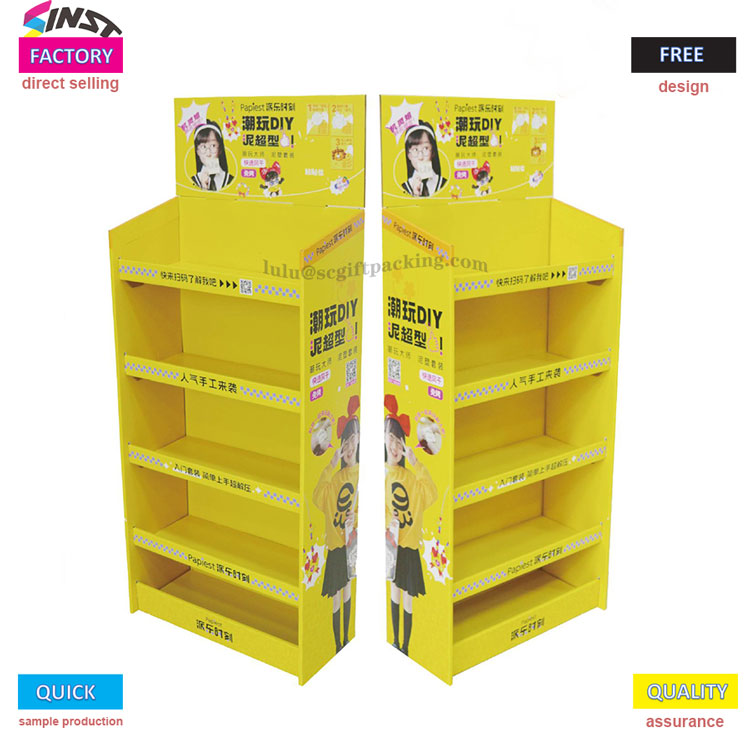
There are many types of display stands, and companies should consider the characteristics of each type of promotional display stand when customizing Cardboard Display Stand with Hooks for their products. In today's fiercely competitive retail market, a well-designed, sturdy and practical hanging paper display rack is not only the "second face" of the product, but also a powerful tool to seize the golden sight of the shelf and stimulate consumers' impulse buying. Below, SINST PRINCING AND PACKING CO., LTD will teach you how to choose the appropriate hanging display stand.
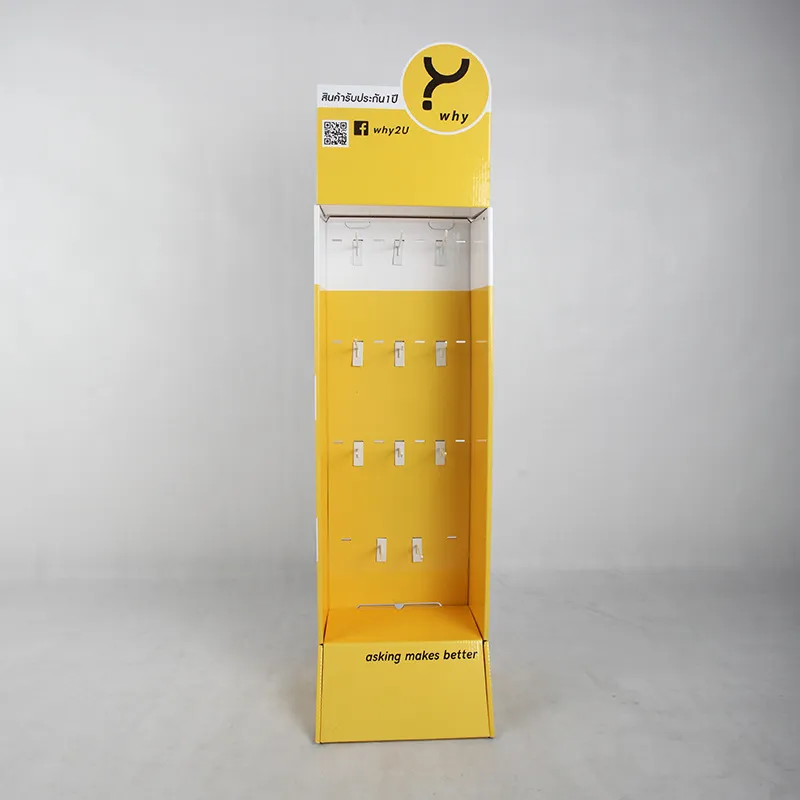
Tip 1: Don't be fooled by "thickness", material and structure are the key to load-bearing
Many buyers ask the first question when inquiring about prices, 'How thick paper should I use?' In fact, the misconception of relying solely on thickness is the most common. The material of the paper (such as kraft paper, grey bottomed whiteboard paper, density board) and the corrugated pattern (A tile, B tile, E tile, etc.) are far more important than just millimeters.
If your display rack needs to hang heavy goods (such as large bottles of toiletries, multi packaged snacks), don't worry about the cost, just lock the high-density fiberboard (MDF) base or multi-layer high-strength corrugated paper composite structure. Remember, asking the manufacturer for a 'load-bearing test report' is more effective than listening to a hundred sales boasts.
Tip 2: The hook is not a "small supporting role", and the material selection is very sophisticated
The hook is the "joint" of the entire display stand, and once the joint is loosened, the whole thing loses. At present, the mainstream hooks on the market are divided into metal hooks and plastic hooks. Metal hooks have a large load-bearing capacity and good texture, but they are prone to rust when exposed to moisture; Thickened plastic hooks are lightweight and rust resistant, but they are prone to brittle breakage when hung for extended periods of overweight.
Tip 3: Even the most beautiful printing is afraid of "rough craftsmanship", details determine the brand style
Some Cardboard Display Stand with Hooks may look high-end from a distance, but up close they can be unappetizing - overflowing logos, sharp edge cuts, skewed indentations... Poor printing and processing technology can directly lower consumers' trust in your brand.
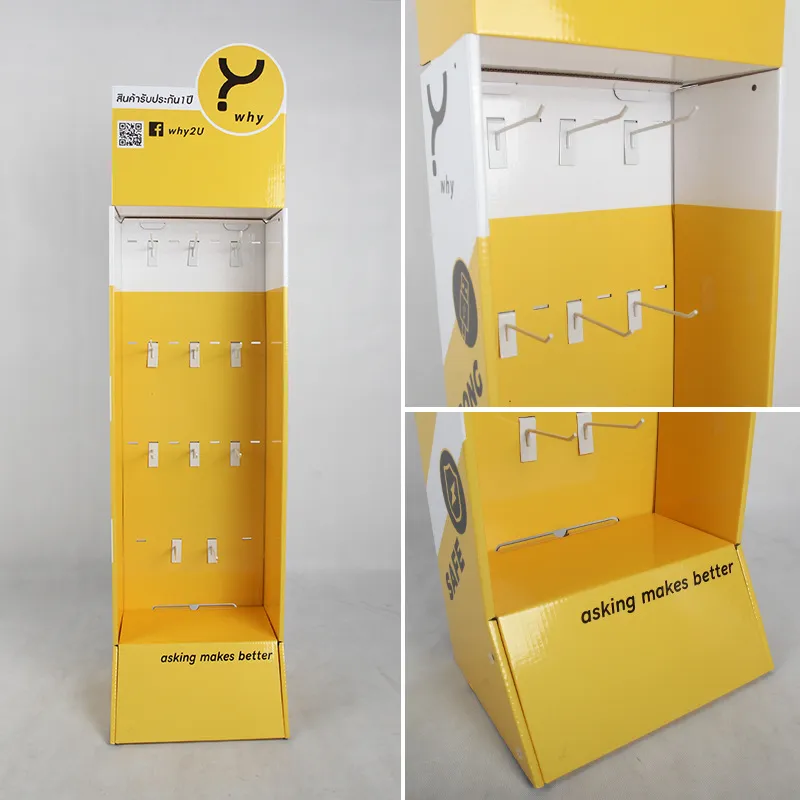
During the sampling stage, it is essential to use a magnifying glass to examine the details. Focus on checking color difference control (requiring manufacturers to benchmark Pantone color codes), surface treatment process (whether the coating is flat, whether there are bubbles in UV polishing). If your display rack design has hollow or irregular cutting, be sure to confirm the accuracy of the knife mold. A display rack with rough edges will only appear cheap.
If you find our display rack helpful, please feel free to email us: rain@sinst-boxes.com, We will arrange one-on-one customer service for you!

 English
  Español
  Português
  русский
  Français
  日本語
日本語  Deutsch
  tiếng Việt
  Italiano
  Nederlands
  ภาษาไทย
  Polski
  한국어
한국어  Svenska
  magyar
  Malay
Malay  বাংলা ভাষার
  Dansk
Dansk  Suomi
Suomi  हिन्दी
  Pilipino
  Türkçe
  Gaeilge
  العربية
  Indonesia
  Norsk
Norsk  تمل
تمل  český
český  ελληνικά
  український
  Javanese
  فارسی
فارسی  தமிழ்
தமிழ்  తెలుగు
  नेपाली
  Burmese
  български
  ລາວ
ລາວ  Latine
  Қазақша
  Euskal
  Azərbaycan
  Slovenský jazyk
  Македонски
  Lietuvos
  Eesti Keel
  Română
  Slovenski
  मराठी
मराठी  Srpski језик